


|
|
||||||||||
 24 comments
UNIZIK Pushes Innovation, Digital Learning In Postgraduate Education by Ikalex(op): 3:31pm On Jul 28
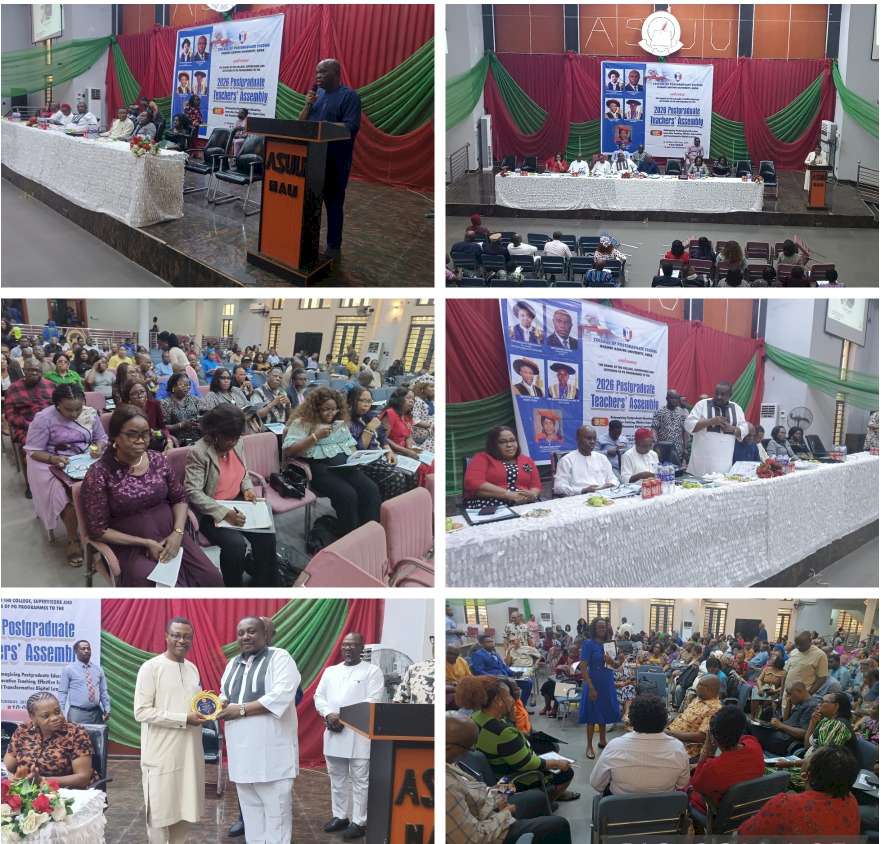
UNIZIK CPGS Holds 2026 Teachers’ Assembly, Pushes for Innovation, Digital Learning and Effective Supervision
By Ikenna Nwokedi
The College of Postgraduate Studies (CPGS), Nnamdi Azikiwe University, Awka, on Tuesday, July 28, 2026, held her one-day 2026 Postgraduate Teachers’ Assembly.
The Assembly, themed _“Reimagining Postgraduate Education: Innovative Teaching, Effective Supervision and Transformative Digital Learning,” was a convergence of all postgraduate teachers of the university.
Declaring the event open, the Vice-Chancellor of UNIZIK, Prof. Ugochukwu Bond Stanley Anyaehie, commended CPGS for convening the timely meeting.
Prof. Anyaehie stated that the challenges of the present era, from Artificial Intelligence to economic transformation, demand that universities produce innovators and problem-solvers, not just degree holders.
The VC affirmed that reimagining the institution’s postgraduate programmes must focus on three key pillars: innovative teaching, effective supervision, and transformative digital learning.
Prof. Anyaehie reminded PG teachers that they are the gatekeepers of academic quality and assured that management would continue to support them through research funding, improved facilities, and policies that reward excellence.
In his welcome address, the Provost of CPGS, Prof. Emmanuel Obidimma, said the Assembly provided an important forum for the college’s leadership to present its annual report, which would form the basis for review and discussion.
Prof. Obidimma added that the meeting would also provide CPGS with recommendations to guide institutional growth, academic excellence, and improved student supervision.
Prof. Obidimma noted that deliberations would examine key strategic priorities, identify practical steps to strengthen programmes, and consider measures to enhance the quality of postgraduate teaching, supervision, and research output.
The Provost urged active participation, expressing hope that collective efforts would yield concrete resolutions and renewed momentum to elevate the college’s standing among the best.
Delivering the keynote address on: “Overcoming Challenges and Maximizing the Value of Online Postgraduate Studies,” the Chairman, Committee of Provosts and Deans of Colleges and Schools of Postgraduate Studies in Nigeria, Prof. Victor Dugga, said Nigerian universities by 2076 would evolve from teaching centres to localized innovation and research hubs driven by decentralized campuses, EdTech integration, and private and global competition.
Prof. Dugga outlined requirements for successful online PG studies to include good policy, the right curriculum, basic infrastructure, appropriate technology, lecturers with the right mindset, and digitally savvy and inquisitive students.
He listed benefits for lecturers to include flexibility, time saving, continuous reinforcement of content and skills, as well as real-world application of theory.
The keynote speaker identified lack of motivation, technical issues, home distractions, and poor time management as top challenges for students in online learning.
Prof. Dugga stressed that the strength and success of online programmes lie in understanding technology and upskilling for the AI era through critical thinking, emotional intelligence, and complex problem-solving.
Delivering a lecture titled: “The Conundrum of Postgraduate Supervision, Thesis Writing and Completion Rates in Postgraduate Programmes", the Dean, School of Postgraduate Studies, PAMO University of Medical Sciences (PUMS) Port Harcourt, Rivers State, Prof. Onyenmechi Johnson Afonne, said effective supervision provides timely feedback, maintains regular communication, guides research direction, and helps students navigate academic challenges.
Prof. Afonne noted that postgraduate programmes train students not only to understand existing knowledge, but also to create new knowledge, network, solve problems, and manage projects.
He defined key terms such as mentoring and supervision, and highlighted types of supervision including hands-on, hands-off, and learning alliance approaches.
The scholar also outlined the responsibilities of supervisors and postgraduate students, as well as students’ expectations of supervisors.
Prof. Afonne concluded that supervision is key to the timely completion of postgraduate programmes and to improving completion rates in the university. The scholar urged the university and the PG college to strengthen the supervisor-supervisee relationship to engender higher completion rates.
The Assembly also featured syndicate sessions on Innovative Teaching, Effective Supervision and Digital Learning, rapporteur reports, an evaluation session, question and answer segment, and presentation of memorabilia to resource persons.
In a vote of thanks, the Chair of the Organizing Committee and Associate Provost (Sciences) CPGS, Prof. Theresa Uzoma Onuegbu, thanked the Vice-Chancellor for his support, the Provost for his leadership, and the resource persons for their insights. The scholar also appreciated the PG teachers and urged them to put all they had learnt into practice for the elevation of the PG programme at UNIZIK.
Related Post viewed by other


Requires Login


This is a good development